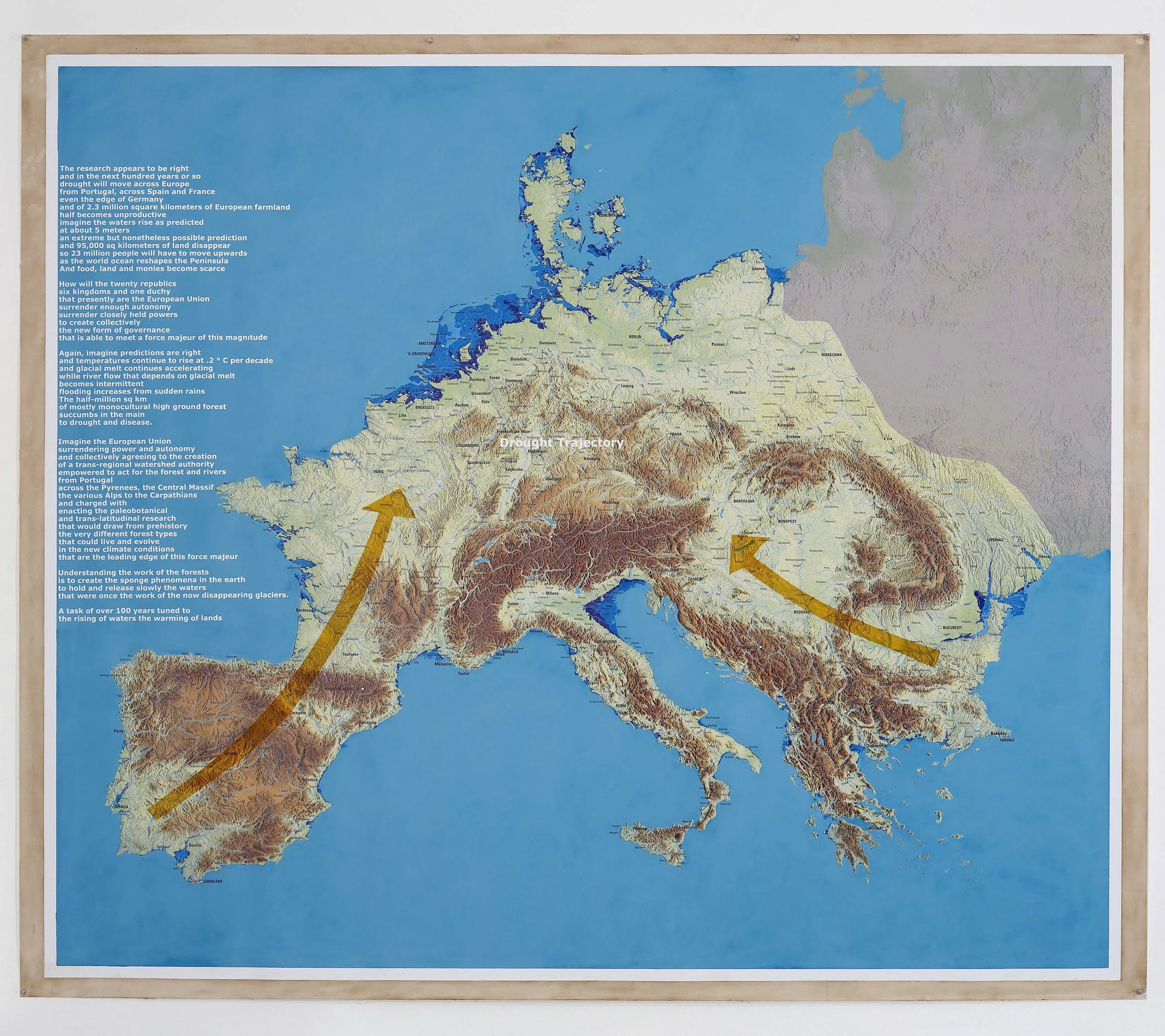
Force Majeure Course Materials
Below are all the reading and viewing materials for each week of the course. The Syllabus can be found here.
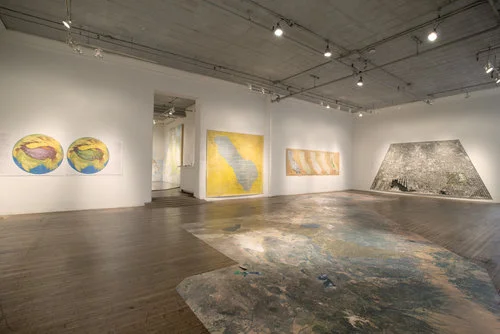
Harrisons Global Mapping, 2013
Week 1- Intro to HARRISON'S practice and guiding metaphors
This week is about understanding that unique qualities and approaches embodied in the Harrisons 60 year long collaborative practice. From the Harrison studio site:
“The Harrison’s concept of art embraces a breathtaking range of disciplines. They are historians, diplomats, ecologists, investigators, emissaries and art activists. Their work involves proposing solutions and involves not only public discussion, but extensive mapping and documentation of these proposals in an art context.
Past projects have focused on watershed restoration, urban renewal, agriculture and forestry issues among others. The Harrisons’ visionary projects have often led to changes in governmental policy and have expanded dialogue around previously unexplored issues leading to practical implementations throughout the United States and Europe.”
READINGS
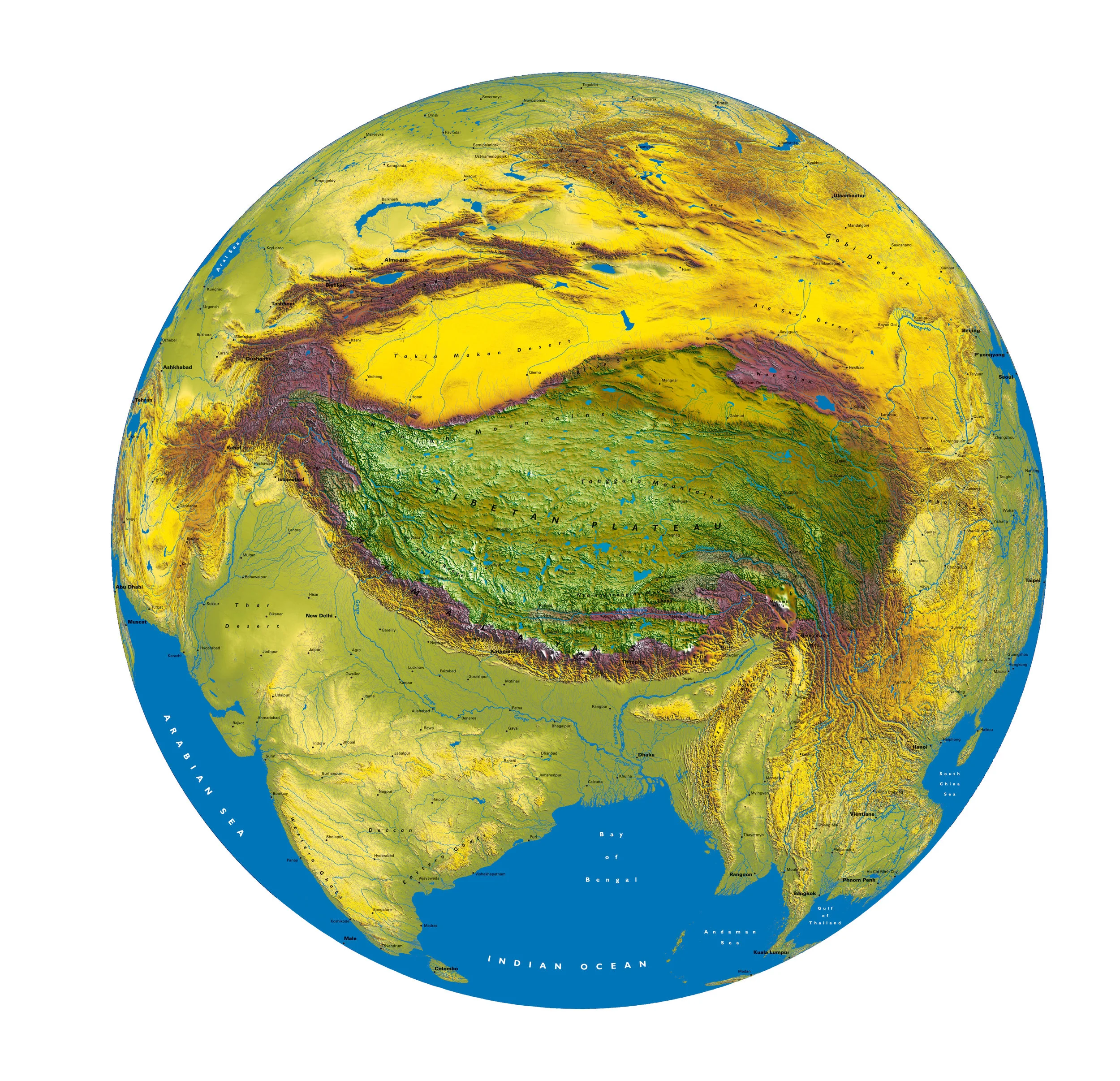
Tibet is the High Ground - A proposal to green the Tibetan plateau, an area known as “the water tower of the world”.
Week 2 - Lowering the entropy of the planet
Lowering the entropy of the planet is a primary guiding metaphor, for becoming a life web focused practitioner.
week 3- Overview of the great global Commons
There are six great natural commons that are particularly under threat of entropic breakdown in our current era. They are are our most precious living systems in the largest possible frame: The Oceans, The Topsoil, The Forests, The Fresh Water, The Atmosphere and finally The Commons of Mind. There is a important flip of perspective in doing force majeure work, we begin by envisioning the whole instead of looking at a part. This encourages us to ask different questions and see how all the parts fit into the whole, not the other way around. Seeing the whole as a frame also allows us to then fit all the parts together in self-reinforcing loops, and create multi-dimensional symbiotic relationships that self sustain and amplify over time. We can then create and enact deeper more thoughtful ways of lower the entropy in living systems.
READINGS
VIEWINGS
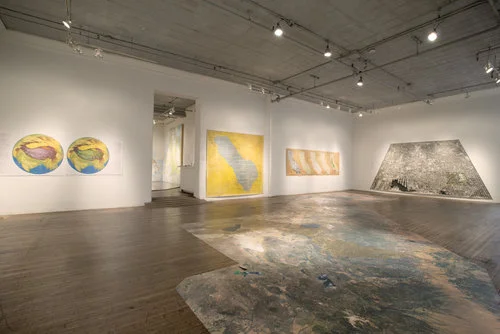
Week 1- Intro to HARRISON'S practice and guiding metaphors
This week is about understanding that unique qualities and approaches embodied in the Harrisons 60 year long collaborative practice. From the Harrison studio site:
“The Harrison’s concept of art embraces a breathtaking range of disciplines. They are historians, diplomats, ecologists, investigators, emissaries and art activists. Their work involves proposing solutions and involves not only public discussion, but extensive mapping and documentation of these proposals in an art context.
Past projects have focused on watershed restoration, urban renewal, agriculture and forestry issues among others. The Harrisons’ visionary projects have often led to changes in governmental policy and have expanded dialogue around previously unexplored issues leading to practical implementations throughout the United States and Europe.”
READINGS
VIEWINGS
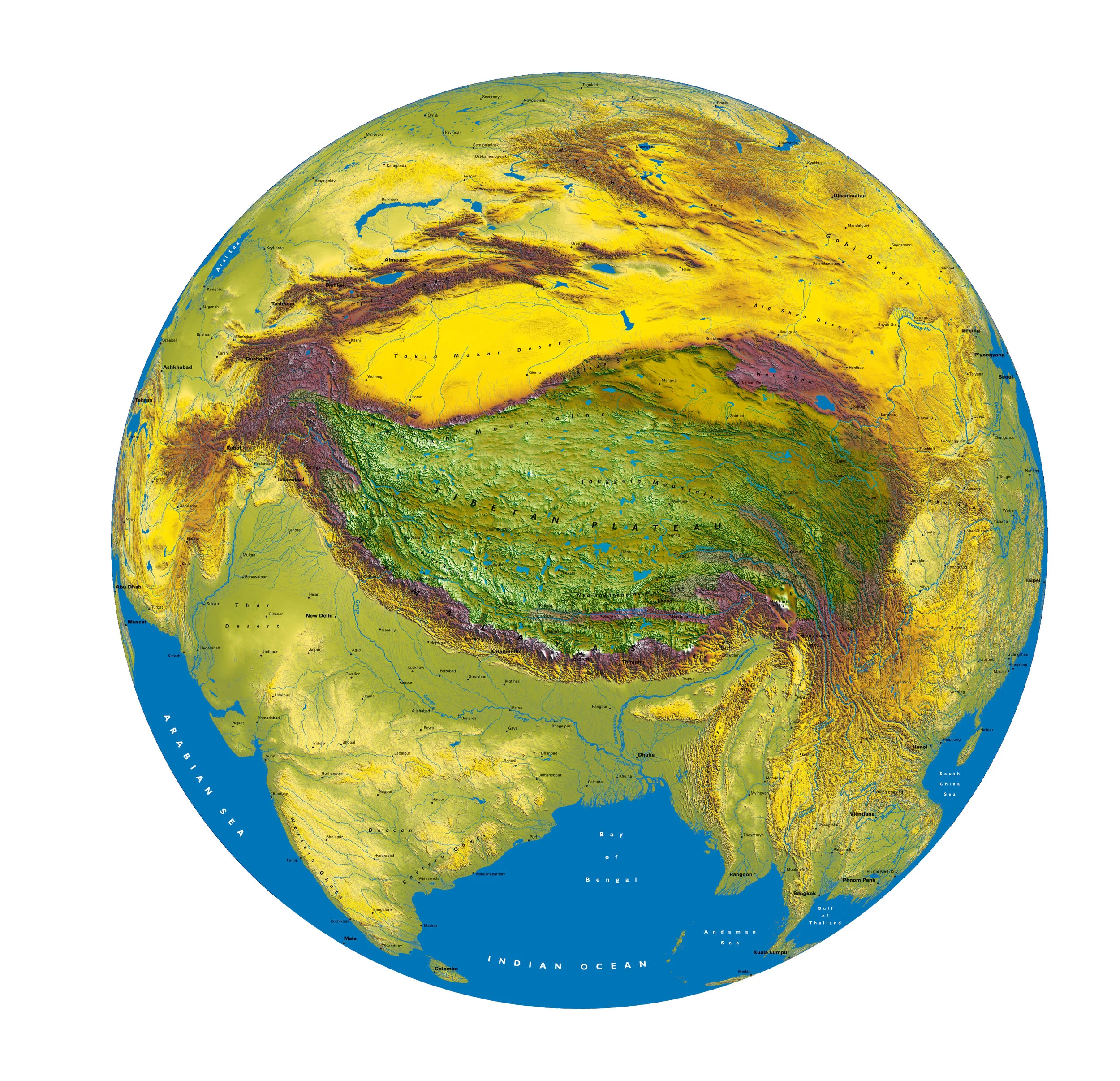
Tibet is the High Ground - A proposal to green the Tibetan plateau, an area known as “the water tower of the world”.
Week 2 - Lowering the entropy of the planet
Lowering the entropy of the planet is a primary guiding metaphor, for becoming a life web focused practitioner. Entropy is the opposite of evolution, evolution makes more complex and higher levels of organization occur, where as entropy breaks down organization and make the energies in the system unusable. As a life web focused practitioner, is is important to design ways to enable evolution within ecological systems and bioregions.
READINGS
Harrison.
Regenesis Group. Regenerative Development and Design: A Framework for Evolving Sustainability (p. 12- 24)
VIEWINGS